

Notes to Self
- Perfume notes are the individual scents you pick up in a fragrance, sorted into top, heart, and base by how fast they evaporate.
- Top notes last about 5 to 15 minutes, heart notes a few hours, and base notes can last all day.
- A note list maps how a scent develops over time, so two perfumes with the same notes can still smell different.
- Skin chemistry, warmth, and oils change how notes read, so the same scent wears differently on everyone.
- To judge a perfume, spray it on skin and wait at least 30 minutes, since the first sniff shows only the top notes.
You read the words top, heart, and base on a product page and thought, cool, but what does that mean? Fair. Perfume notes get talked about like everyone was born knowing them.
Here is the short version. Perfume notes are the scents you smell in a fragrance, and they show up in stages. That is why a scent can smell one way in the morning and another way by lunch.
This guide breaks down the three tiers and how long each one lasts. You will also learn how to read a note list so you stop getting burned on a blind buy. By the end, a note list should read like a preview of what you are about to wear.

What Are Perfume Notes?
Perfume notes are the individual scents you pick up in a fragrance, like bergamot, rose, or vanilla. Each note is a single scent impression, one recognizable smell inside the bigger blend.
A note name describes a scent character, not always one exact ingredient. Rose can come from real rose or from a lab-made blend built to smell like rose. Either way, you read it as rose.
Notes get grouped into three tiers: top, heart, and base. The tiers are set by how fast each scent evaporates, which is why a fragrance shifts as you wear it.
Light molecules flash off first, and heavy ones hang around. So the order you smell things is not random. It is chemistry, playing out on a clock.
What Is The Fragrance Pyramid?
The fragrance pyramid is a map of when you smell each note over time. Top notes sit at the peak, heart notes in the middle, base notes at the bottom. It is a timeline, not three layers physically stacked in the bottle.
Everything is mixed together when you spray. The tiers describe what you notice first, next, and last as the lighter scents burn off. Take our Love Club eau de parfum: saffron and Sichuan pepper up top, Turkish pink rose and wild raspberry in the heart, whipped marshmallow and ebony woods at the base.

Spicy / Floral
Love Club
A pyramid you can follow in real time. Saffron and Sichuan pepper open sharp, rose and raspberry take the middle, and marshmallow and ebony woods hold the last few hours.
Top Notes: The First Impression
Top notes are the first thing you smell, and they leave the fastest. They are made of the lightest, most volatile molecules, the ones that evaporate quickly, so they last around 5 to 15 minutes.
Common top notes are citrus (bergamot, mandarin, lemon), light herbs, light spice, and aldehydes. They read bright and sharp, the opening handshake of a scent.
Here is the trap: do not judge a whole perfume on the opening. Those first few minutes fade fast, and what comes next is what you actually wear. If you like a clean, bright start, our fresh citrus-forward scents live in this space.
Heart Notes: The Main Character
Heart notes show up as the top notes fade, usually within the first 20 to 60 minutes. They carry the scent for a few hours, the phase you wear most of the day.
Common heart notes are florals, warm spices, and fruits. They set the personality of a fragrance, the part people remember on you. If the top notes are the intro, the heart is the whole conversation.
Florals do not have to read soft or pretty. A rose can come with an edge, wrapped in spice or something darker. You can find that in our floral heart scents.

Base Notes: The Lasting Foundation
Base notes are the heaviest, slowest molecules, so they show up last and linger for hours or more. They are what you smell on your skin late in the day.
Common base notes are woods, musks, resins, vanilla, amber, and patchouli. They give a scent depth, drive how long it lasts, and shape its trail (the sillage, or how far it projects).
If you like a warm, sweet finish, our warm gourmand scents lean into notes like vanilla, amber, and tonka bean. Some base notes act as fixatives too, holding the lighter notes in place so the whole scent lasts. This is the part people lean in to smell on you hours later.
Top, Heart, And Base Notes At A Glance
Here is the quick reference. Same three tiers, side by side, so you can scan how they compare. Keep it as a cheat sheet for the next time a note list stares back at you.
| Note tier | When you smell it | Typical duration | Common materials | Its job |
|---|---|---|---|---|
| Top | First, right after you spray | About 5 to 15 minutes | Citrus, light herbs, light spice, aldehydes | The first impression that pulls you in |
| Heart | As the top notes fade | About 20 to 60 minutes into a few hours | Florals, warm spices, fruits | The personality you wear most of the day |
| Base | Last, and it stays | Several hours and up | Woods, musks, resins, vanilla, amber, patchouli | The depth, longevity, and trail |
Are Perfume Notes The Same As Ingredients?
No. A note list tells you how a scent smells and develops, tier by tier. The full ingredient list is a separate, longer thing built for labeling, not for describing the vibe.
Some notes are accords. An accord is several materials blended to read as one impression, like amber, which is a built accord rather than a single raw material.
That is also why two perfumes listing the same notes can smell different. The materials behind each note, the amounts used, and the way a perfumer pairs them all change the result. Our master perfumers build in unexpected pairings, a rose wrapped in leather, ripe fruit that bites back.
Want to see how a full note list reads? The pyramids live right on the product pages across our eau de parfum collection.
Why Does Your Perfume Smell Different After An Hour?
The top notes evaporated and the heart and base took over. Nothing went wrong, that is the scent doing what it is built to do.
Your skin plays a part too. Warmth, oils, and pH shift how notes read, mostly in the heart and base. The same bottle can smell a little different on you than on a friend.
That is the point. A NOYZ scent is genderless and wears differently on everyone. The version a scent shows on your skin is the one that counts.
The pyramid is also a simplification. Some scents stay more linear and hold steady, and notes often overlap instead of switching cleanly. Think of the three tiers as a guide to the arc, not a strict schedule.
How To Identify Top, Heart, And Base Notes When You Sample
Here is a method that keeps you from guessing.
- Start with the base notes. You wear them the longest, then read the heart, then the top.
- Spray on skin, not a strip. Give it at least 30 minutes before you decide anything.
- Check back over a few hours. Notice how the heart settles and how the base lands late.
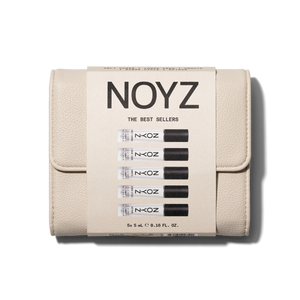
A counter strip mostly shows the opening, which is why home sampling wins. Skin adds the warmth and oils that pull the heart and base forward, and a strip cannot do that. A discovery kit lets you test on skin across the whole drydown before you commit.
How To Use Notes To Find A Scent You'll Actually Wear
A note list is a shopping tool once you know how to read it. Use it to predict what you will like before you buy. That turns the pyramid from trivia into a filter you can actually shop with.
- Look at scents you already love and find the notes they share.
- Judge top, heart, and base as one combo, not a single note.
- Pick by occasion and feeling, not gender. Citrus and musk reads clean; rose, saffron, and woods reads bolder.
Not sure where to start? You can take the scent quiz and let your answers point you toward a profile.
Should You Layer Perfumes Using Their Notes?
Yes, and note volatility tells you how. Layering is stacking two scents so they read as one on your skin. Done right, it gives you a scent no one else is wearing.
Start with a base-note-heavy scent as your foundation, something warm and woody that sticks around. Then add a top-note-forward scent for brightness. The heavy base holds while the light opening lifts it.
A quick pattern to try: pair a warm base of amber and cashmere woods with a citrus opening. It reads bright up front and rich later. The contrast is what makes it feel like yours, and our layering pair puts that exact combination in one box.
Keep it simple. Two scents at a time, one spray each, and test on skin before you wear it out. There are no rules police here, so play with it and keep what feels like you.
FAQ
Are heart notes and middle notes the same thing?
Yes, they are the same tier. Heart notes develop after the top notes fade and before the base settles in.
Why does a perfume smell different on a paper strip than on my skin?
A paper strip has no chemistry of its own, so it mostly shows the opening. Your skin's warmth, pH, and oils interact with the notes and shift how the heart and base read.
Do all perfumes have three tiers of notes?
Not always. The three-tier pyramid is common, but some scents smell like one steady blend from start to finish.
Does a longer note list mean a longer-lasting perfume?
No. Longevity comes mostly from the base notes and the formula, so rich base notes can outlast a long list of light ones.
If you dislike one note, should you avoid every perfume that lists it?
Not necessarily, because a note reads differently at low concentration and inside an accord. A note you dislike on its own can work quietly in the background of a blend you love.